
Cigar Guide / 02
Navigating Wrapper Shading
Wrapper shade is a visual description, not a strength meter. Variety, growing conditions, curing, fermentation, and the rest of the blend all matter more than color alone.
Separate Shade, Variety, and Origin
Three different facts are often compressed into one wrapper label. Keeping them separate prevents a color word from being mistaken for a tobacco variety or a place.
What the Leaf Looks Like
Claro, Colorado, Maduro, and Oscuro primarily describe a visual range. Boundaries overlap, and makers do not all sort to an identical color chart.
What the Tobacco Is
Habano, Corojo, Broadleaf, and Criollo identify seed families, cultivated types, or trade groupings rather than one guaranteed shade.
Where It Was Grown
Ecuador, Nicaragua, Mexico, Honduras, Connecticut, and other origins describe geography. The same broad tobacco family can develop differently in another climate or soil.
Shade-Grown or Sun-Grown
Shade-grown refers to cultivation under cloth or reduced direct sun; sun-grown leaf receives more direct light. Neither phrase is a complete flavor or strength description.
What Changes the Color
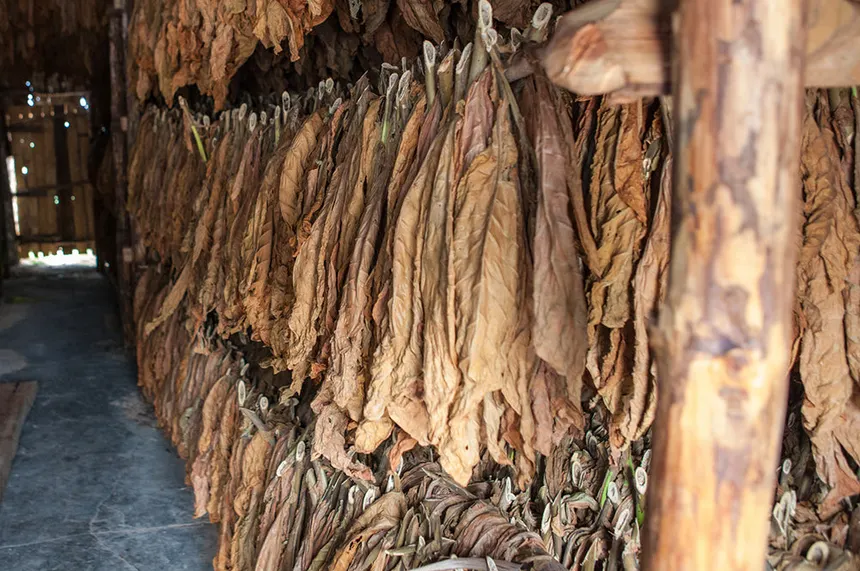
Growing Conditions
Seed, soil, rainfall, temperature, position on the plant, and exposure to sunlight affect thickness, oils, texture, and color before curing begins.
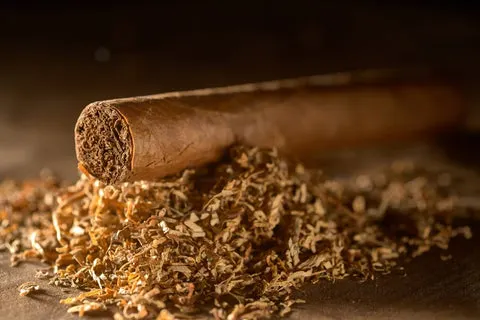
Curing and Fermentation
Curing removes moisture gradually. Fermentation uses controlled heat and moisture to continue chemical change. Duration and handling influence color, aroma, elasticity, and refinement.
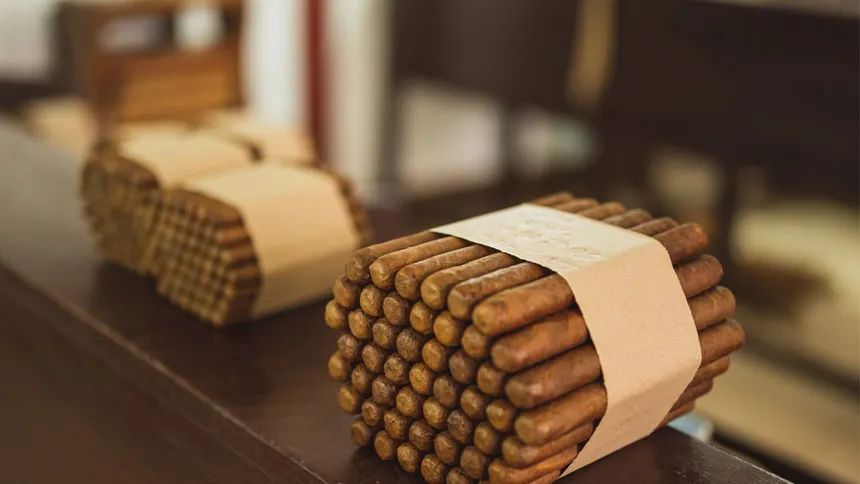
Sorting and Selection
Workers sort leaves by color, texture, size, vein structure, elasticity, and condition. Shade terms group a continuum, so neighboring categories can overlap.
The Common Shade Scale
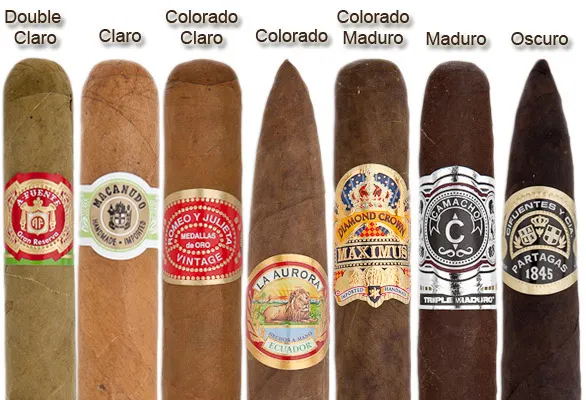
Source: operator-supplied wrapper-shade reference, using branded cigar examples.
The trade uses more names than these, and usage varies between makers. This sequence is best understood as a light-to-dark vocabulary.
Pale tan to greenish leaves associated with limited sun exposure or abbreviated curing. Double Claro is also commonly called Candela.
Light to medium brown. Natural is a broad trade description rather than one exact leaf or flavor profile.
Medium brown through reddish brown. Rosado describes a reddish cast and is not a single tobacco variety.
A darker brown range between Colorado and Maduro in traditional color terminology.
Dark brown leaf developed through seed choice, sun exposure, curing, and extended fermentation. Maduro means mature or ripe, not automatically strong.
Very dark brown to nearly black. Like every shade name, it describes appearance more reliably than strength.
Catalog use: record the maker’s stated shade when it exists. If the retailer does not publish one, say so instead of assigning a shade from a photograph. Lighting, white balance, cellophane, and image editing can shift the apparent color substantially.
What Shade Can Tell You
Appearance and Processing Clues
Shade can help distinguish two versions of the same line and can hint at how the wrapper was grown or processed.
Strength and Flavor
A dark wrapper can be smooth or sweet; a pale wrapper can cover a strong filler blend. Read the whole blend, origin, and stated strength.
Color Does Not Equal Variety
Two Maduro wrappers can come from different tobacco types and countries. They can differ substantially in thickness, sweetness, spice, combustion, and aroma.
Processing Creates Range
A tobacco type may appear in lighter or darker presentations depending on cultivation, priming, curing, fermentation, and selection.
Practical rule: use wrapper shade to identify the exact cigar, not to predict the experience by itself. “Maduro” and “Natural” versions belong in separate comparison records whenever the retailer sells them separately.
Reading the Wrapper’s Condition
Small veins, slight color variation, and a visible seam are ordinary features of a whole tobacco leaf. A wrapper need not look airbrushed to be sound.
A light sheen can reflect oils at the surface, but appearance varies by leaf and storage. It is not a standalone quality grade.
Splits, a lifting cap, or a wrapper separating at the seam can indicate physical damage or poor moisture balance. Inspect the foot and cap before choosing.
Any fuzzy, raised, spreading, or colored growth should be treated as suspect. Do not rely on internet folklore to declare it harmless; isolate it and ask the retailer or manufacturer.
Comparison checklist: confirm the line, vitola, dimensions, wrapper type, wrapper shade or version, and package quantity. A similar color photograph is supporting evidence, not proof that two listings are the same cigar.