
Cigar Guide / 03
Pairing Cigars with Drinks
The chart below pairs wrapper colors with drink styles. Treat it as a starting point, not a rule: wrapper shade alone cannot tell you how a cigar tastes.
Wrapper Color Pairing Chart
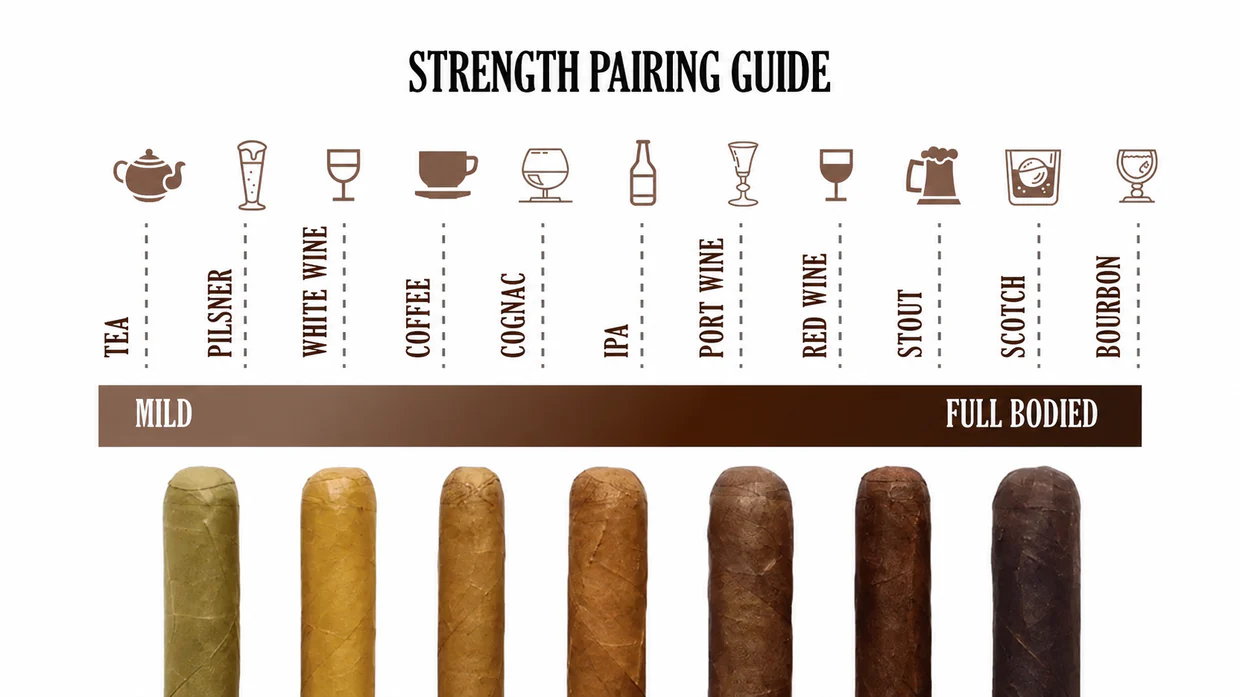
Source: Lucky Cigar. Adapted with permission.
The chart is an example of possible pairings, not a strength scale for every cigar.
Use the color row to generate an idea, then read the cigar’s blend and tasting description. Two cigars with equally dark wrappers may call for different pairings because their filler, fermentation, and strength differ.
Start With Balance
Match Weight First
A delicate drink can disappear beside a forceful cigar; a heavily flavored drink can flatten a subtle blend. Compare body and intensity before matching specific flavors.
Use Sweetness Carefully
Some sweetness can soften pepper, bitterness, or char. Too much can dominate the tobacco. A small taste of each together is more useful than a rigid chart assignment.
Look for a Bridge
Cocoa, coffee, toasted nuts, wood, fruit, and spice can connect a cigar and a drink. One shared note is enough; the pairing does not need to duplicate every flavor.
Keep Water Nearby
Plain water lets you revisit the cigar’s flavor without adding sweetness, acidity, or alcohol. It is also a sensible baseline before testing any pairing.
Working Examples
Try unsweetened black tea, oolong, or a lightly roasted coffee. Lower roast and moderate tannin leave room for cedar, cream, hay, and gentle nut notes.
A medium-roast coffee or malt-led brown ale can echo toast, nuts, and earth. Avoid adding so much roast or bitterness that the cigar loses definition.
Rye whiskey can reinforce spice, while ginger beer provides a nonalcoholic contrast with sweetness and acidity. Start small because either can magnify heat.
Espresso, dry stout, or an aged rum may connect cocoa, molasses, and char. Choose the least sweet option that still balances the cigar.
Fragrant tea, fruit-led brandy, or a restrained fortified wine can create a bridge. High acidity, heavy oak, and residual sugar can each become dominant, so test them separately.
A mature bourbon or malt whisky can stand beside leather, char, pepper, and dense tobacco. Add water to high-proof spirits and compare again before deciding the pairing works.
Build the Pairing in Order
Taste With Water
Take several draws with plain water first. Note the cigar’s body, sweetness, bitterness, spice, and finish before another drink changes your palate.
Try the Drink Alone
Identify its sweetness, acidity, bitterness, alcohol heat, and weight. This makes it easier to tell whether the combination is balanced or merely intense.
Watch What Changes
After a small sip, notice whether the cigar becomes clearer, flatter, harsher, sweeter, or more aromatic. A useful pairing should reveal something without erasing the tobacco.
Adjust as the Cigar Develops
The first third and final third may not want the same drink. Return to water, reduce the pour, or switch styles when heat and concentration increase.
What the Chart Cannot Decide
Shade is a visual description. It is not a reliable measure of nicotine strength, body, sweetness, or quality. Pairing is subjective, and the same cigar can change through its smoking time. If choosing an alcoholic drink, keep its strength and the health effects of combining alcohol and tobacco in mind; no pairing reduces the risks of either.
Practical sequence: taste the cigar with water, note its intensity and dominant flavors, then try a small amount of the proposed drink. Keep what works and discard the chart’s suggestion when it does not.