
Cigar Guide / 01
How Cigar Sizes and Shapes Work
Two measurements describe the physical cigar. Shape describes its construction. Familiar names such as Robusto and Toro are useful shorthand, but dimensions remain the reliable comparison.
Read the Two Numbers
Measured in Inches
A 6-inch cigar is simply six inches from foot to cap. More length usually means more smoking time, although pace and construction matter too.
Measured in Sixty-Fourths
A 50 ring gauge is 50/64 inch across, or about 0.78 inch. Larger gauges hold more filler and can change the balance of a blend.
What Size Changes, and What It Does Not
Length, diameter, shape, tobacco proportions, and construction work together. Two sizes in the same line use the same named blend, but they need not taste identical because the ratio of wrapper, binder, and filler changes and the burning surface develops differently.
Usually More Time
A longer cigar contains a longer column of tobacco and normally lasts longer at the same pace. Length does not automatically make it stronger or fuller.
More Room for Filler
A wider cigar can carry more leaves in its filler recipe. The wrapper covers more area too, but it represents a smaller share of the total tobacco than on a narrow cigar.
Proportions Matter
A Lancero and a Gordo from one line may emphasize different parts of the same recipe. Treat each size as its own expression, not merely a longer or shorter copy.
Size Is Not Quality
No dimension is inherently more refined, stronger, or better. Construction, condition, blend, and the smoker’s available time matter more than prestige attached to a name.
About smoking time: dimensions can suggest a range, but humidity, filler density, draw, wind, relights, and smoking pace can change it substantially. A name alone is not a reliable timer.
Parejo and Figurado
Parejo
The familiar cylinder with an open foot and a rounded, capped head. Corona, Robusto, Toro, Churchill, and Gordo are usually Parejos.
Figurado
Any deliberately sculpted body: Torpedo, Perfecto, Pyramid, Belicoso, or another tapered form. The changing diameter can alter how the blend presents as it burns.
Pyramid, Torpedo, and Belicoso
These names all describe a tapered head, but makers use them inconsistently. A Pyramid usually widens steadily from foot to head; Torpedo and Belicoso are often used for pointed or shouldered heads.
Perfecto and Diadema
A Perfecto narrows at both ends. A Diadema is typically a larger, elongated Figurado. Because the burning diameter changes, different portions of the filler can become more or less prominent.
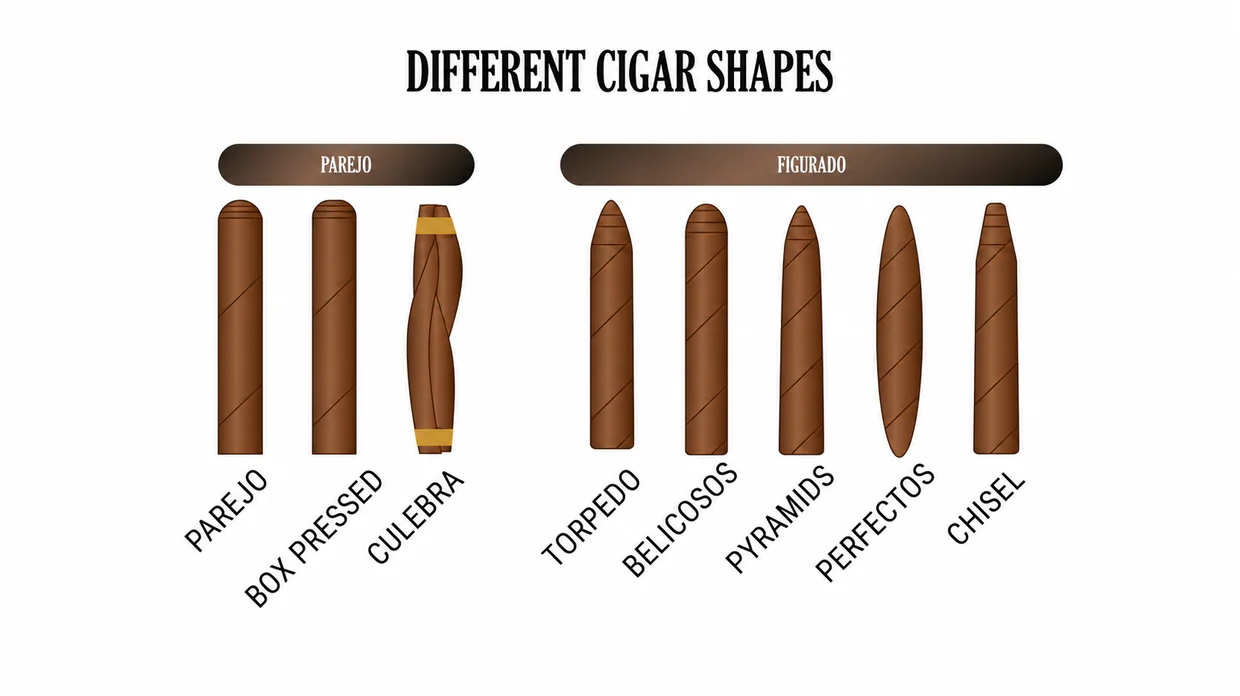
Source: Lucky Cigar. Adapted with permission.
Common Vitola Names
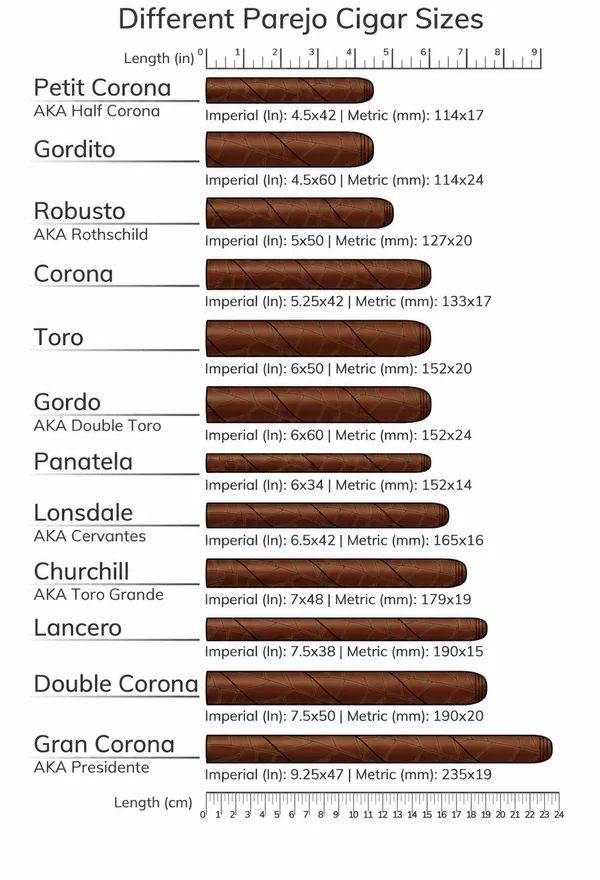
Source: Bespoke Unit, Charles-Philippe Bowles and Paul Anthony. Adapted with permission.
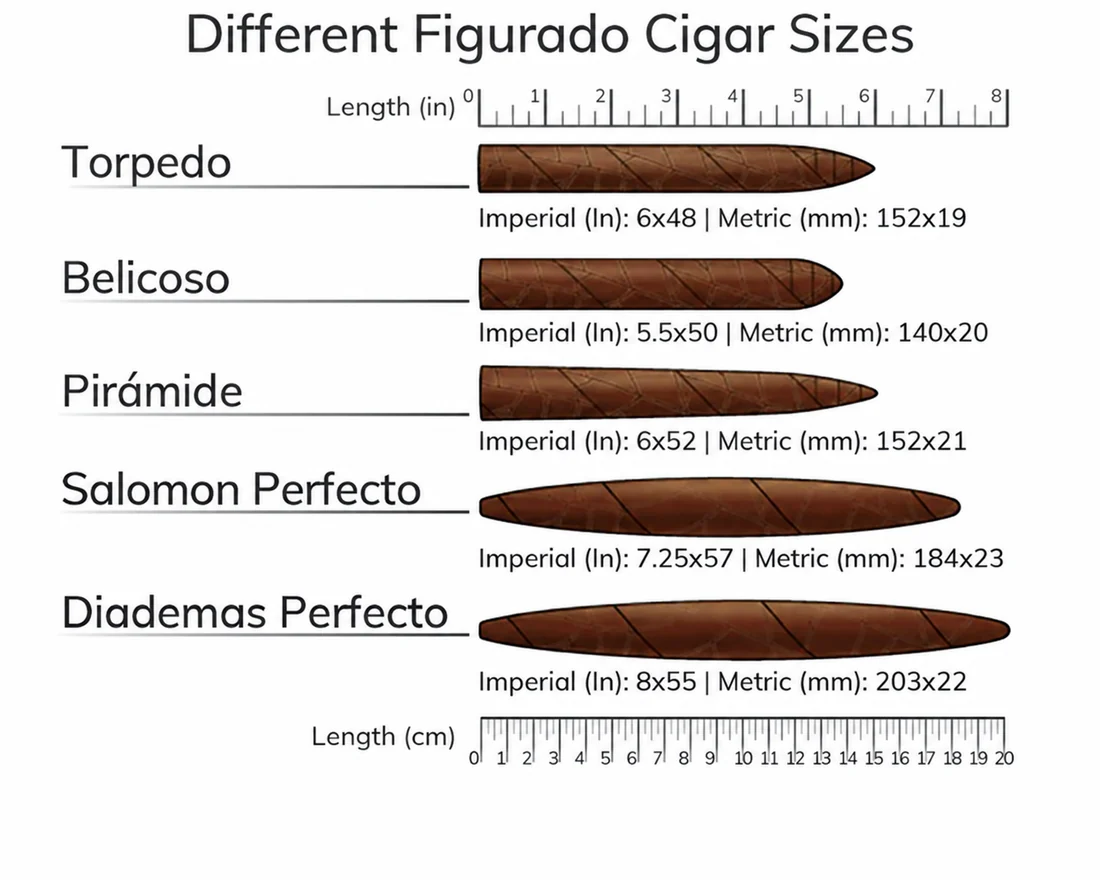
Source: Bespoke Unit, Charles-Philippe Bowles and Paul Anthony. Adapted with permission.
These dimensions are common reference points, not universal standards. One maker’s Toro can differ from another’s, so CigarFlux keeps the stated length and ring gauge alongside the name.
A compact, relatively slim format. It often concentrates the wrapper’s contribution and suits a shorter session.
A slimmer classic that places more emphasis on the wrapper relative to the filler.
A thicker Corona that leaves more room for filler while retaining relatively focused proportions.
Shorter and broader; a widely used format that usually offers a substantial smoke without Churchill length.
Longer than a Robusto with a similar gauge, giving the blend more time to develop.
Longer and slimmer than a Corona, with a relatively high wrapper-to-filler ratio.
Long and moderately slim. The greater length generally means a longer smoking time.
Long and slender, with a high wrapper-to-filler ratio and a quicker-changing burn line.
A very broad format carrying more filler tobacco and usually requiring more time.
Long and narrow. Good construction matters because a narrow bunch leaves less room for airflow variation.
A Figurado with a pointed or sharply tapered head. The cut can adjust the opening and draw.
A Figurado that widens through the body before narrowing again, changing the burning diameter as it progresses.
Practical rule: compare dimensions first and the vitola name second. Size influences burn, duration, and blend balance, but it does not by itself determine strength or quality.
How to Choose a Size
Choose a format you can finish without rushing. A smaller cigar enjoyed at a normal pace is more useful than a large cigar smoked too quickly.
If you already know a line, trying another vitola shows how its proportions change the blend. Keep the wrapper and blend version constant for a meaningful comparison.
Retailers may use different vitola names. Match length, ring gauge, wrapper version, and package before assuming two listings describe the same cigar.
A single, five-pack, sampler, bundle, and box are different offers. The cigar can be identical while the quantity and packaging are not.
Cutting a tapered head: begin with a conservative cut above the shoulder and test the draw. You can remove slightly more; you cannot replace a cap cut too deeply.